
Spinal Fractures
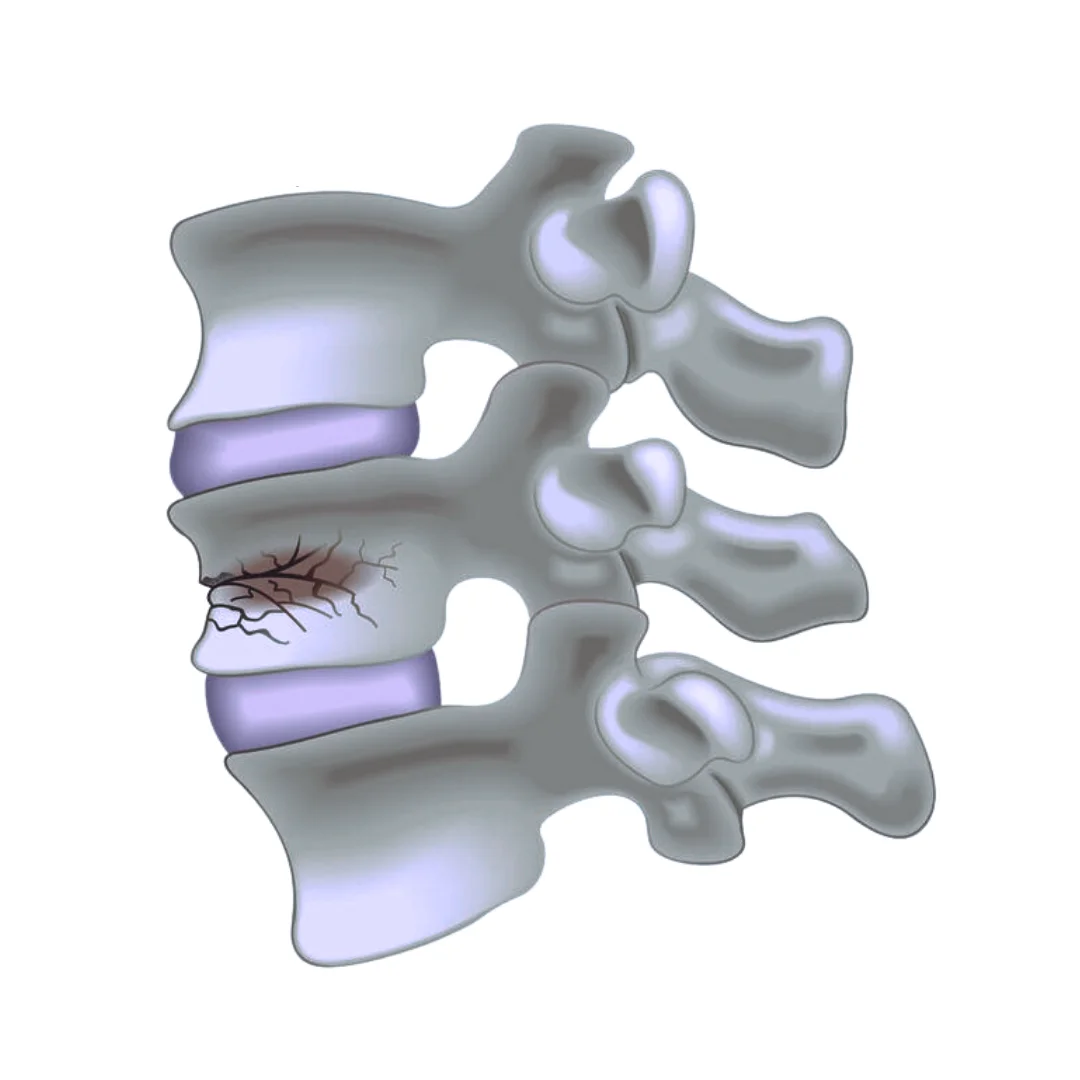
Spine and spinal cord injuries are injuries that particularly affect the younger population. The majority of patients are between 18 and 25 years of age. Men are four times more likely than women to sustain a spinal fracture. Traffic accidents and falls from a height are the most common causes. These injuries can result in paralysis and lead to serious socio-economic problems. About 5-10% of fractures occur in the cervical (neck) vertebrae, 70% in the thoracic and lumbar (upper and lower back) vertebrae, and the rest in the remaining vertebrae. The most frequently injured region is where the thoracic and lumbar vertebrae meet, at the point where the rigid spine transitions into the mobile spine (the thoracolumbar region). Compression fractures, in which the front portion of the fractured vertebra collapses, are the most common type. If the fracture extends into the middle column of the vertebra, a burst fracture develops. Burst fractures carry a risk of spinal cord injury and paralysis. In more severe injuries, a fracture-dislocation may occur. Plain radiography (X-ray), computed tomography (CT), and magnetic resonance imaging (MRI) are used in diagnosis. Most compression fractures can be treated with conservative methods (cast, brace, bed rest, etc.). Fracture-dislocations usually require surgery. Surgical treatment is needed in cases of severe collapse, in fracture-dislocation cases, and in cases of spinal cord paralysis. The goal here is to stabilize and fuse the fractured spine using metal instrumentation. The procedure can be performed from the front or the back of the spine. In addition, bone fragments pressing on the spinal cord are removed during surgery so that the pressure on the spinal cord is relieved.