
Osteoporosis (Bone Loss)
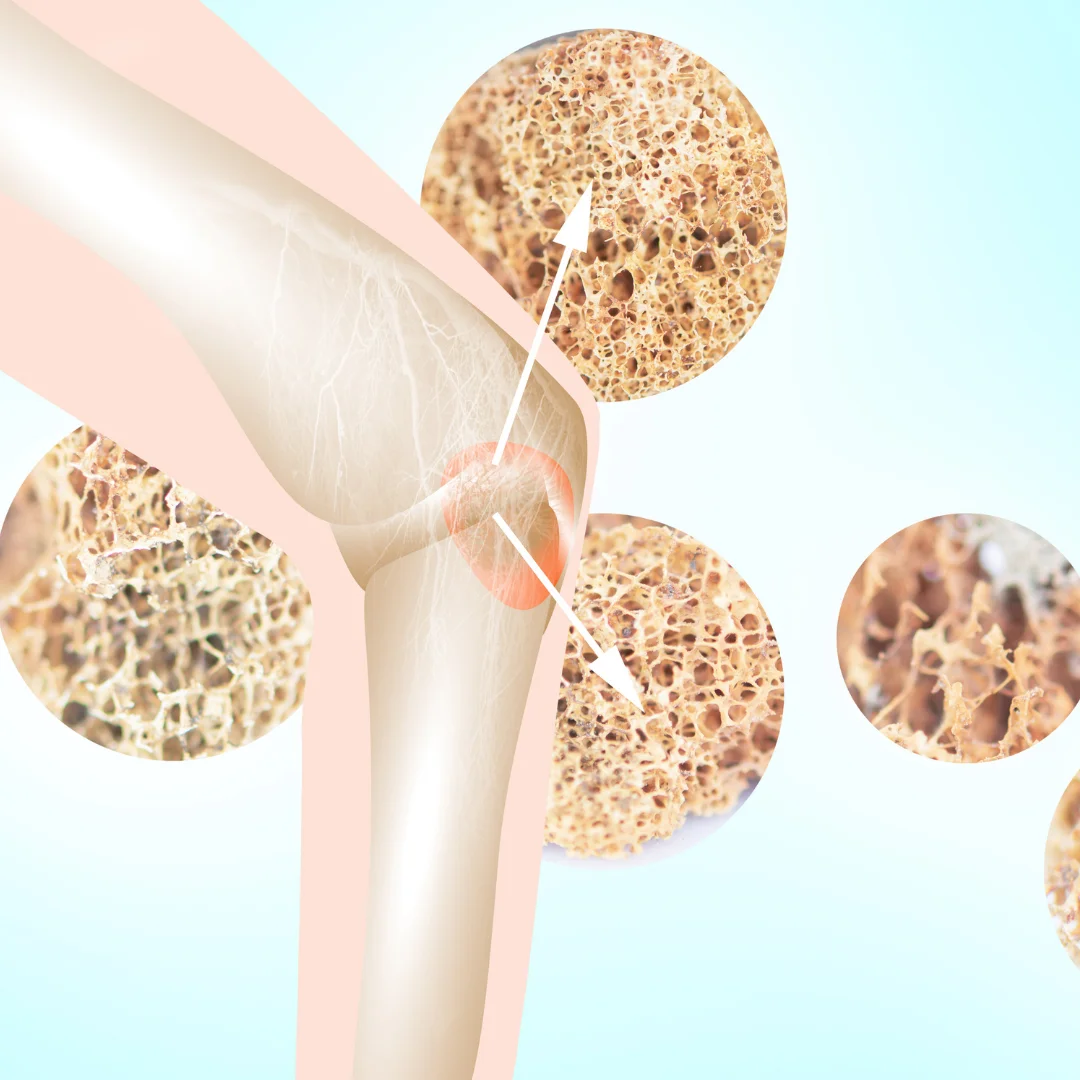
Osteoporosis, commonly known as bone loss, is an increase in bone fragility that arises from a decrease in bone mass together with a deterioration of the bone's microarchitecture. According to the Turkish Statistical Institute (TÜİK), life expectancy in Turkey is stated to be 73.7 years for men and 79.4 years for women. As the elderly population grows, we are seeing osteoporosis more frequently. Osteoporosis has become an important public health problem. In patients whose osteoporosis is left untreated, the risk of fracture increases. Studies show that the rate of osteoporosis-related fractures is 15-20 percent in men and 40-50 percent in women. Spinal fractures, hip fractures, wrist fractures and shoulder fractures are seen. After a spinal fracture, the risk of developing a hip fracture increases 4-5 fold. In these patients, systematic osteoporosis treatment must always be applied in order to prevent the risk of a further fracture. In Turkey, the lifetime risk of hip fracture in women over the age of 50 has been reported as 15 percent. A study conducted in 2010 identified 24,000 hip fractures in women over the age of 50, and this figure is projected to reach 65,000 by 2035.
Those in the risk group for osteoporosis include: elderly patients with impaired calcium absorption in the intestine, those with a family history of genetic fractures, people of the white race, blondes, and thin, slight-built patients,
New techniques such as vertebroplasty and kyphoplasty have been developed to stabilize the spine after a fracture. Percutaneous vertebroplasty is a new, minimally surgical technique that can serve as an alternative in the treatment of osteoporotic fractures when conventional treatments prove insufficient. With vertebroplasty, the spine can be strengthened in patients who have an osteoporosis-related spinal fracture, or in patients who have a spinal tumor or have suffered spinal trauma.
After a spinal compression fracture is diagnosed by MRI or CT, the patient is laid face down and sedated with light anesthesia. Guided by an imaging method called “C-arm fluoroscopy,” the doctor enters the affected vertebra through a small skin incision using special needles and injects a cement-like material (polymethyl methacrylate) into the vertebra. While the injection itself takes only 10 minutes, the whole procedure takes about an hour. The cement mixture sets in about half an hour, and after the patient waits a short while on the ward to recover, they can be sent home the same night or the next day. Patients are usually given painkillers to ease the pain of the first few days. Because osteoporosis patients are usually elderly and may have other conditions that carry surgical risk, vertebroplasty — being a less invasive procedure — may be preferred over open surgery. Vertebroplasty does not correct the bone loss caused by osteoporosis, but it does stabilize the fractures that have occurred. The spine is the region to which cancers from other parts of the body most often spread (metastasize). For this reason, spinal metastases cause pain and fractures in these patients. In such patients, vertebroplasty provides spinal stabilization and, by reducing pain and increasing the ability to function, improves quality of life.
Percutaneous vertebroplasty is a relatively new technique and its long-term results are not fully known. In osteoporotic spinal fractures it reinforces the fractured vertebra, provides stabilization and relieves pain. However, osteoporosis is a systemic disease and requires systemic treatment. In patients with any vertebral fracture, the likelihood of another fracture in the vertebrae immediately adjacent to the fractured one is five times higher than normal. Therefore, medical treatment to reduce the severity of osteoporosis must be started in these patients. Although complications occur in less than 1%, percutaneous vertebroplasty can lead to infection, bleeding, or embolism (blockage in the vessels) as a result of the cement mixture entering the bloodstream and passing through the heart and lungs. Please discuss with your doctor whether vertebroplasty is suitable for you.
Kyphoplasty is a new, minimally invasive method used in the treatment of spinal fractures that can occur due to bone loss, particularly in postmenopausal women. As with vertebroplasty, the main aim of this procedure is also to strengthen the spine. However, one advantage of kyphoplasty is that the vertebra that has collapsed because of the fracture can be restored, thereby also addressing the hunched posture that develops as a result of the fracture. Osteoporosis-related spinal fractures generally cause the front portions of the vertebrae to collapse and come together in a wedge shape. This leads to pain, loss of height and a stooped appearance (the “dowager's hump”). Kyphoplasty is a two-step procedure. First, a special balloon is placed inside the fractured, crushed vertebra, and the balloon is inflated to raise the walls of the fractured vertebra and allow it to take on a more normal shape. Then the cavity created by the balloon is filled with a cement-like material (bone cement, polymethyl methacrylate), making the normal (corrected) shape permanent. By giving the vertebrae more normal shapes, the alignment and shape of the spine can be corrected. Kyphoplasty is performed through a small incision in the back. It is done in hospital under local or general anesthesia, depending on the severity of the condition. The entire procedure takes about an hour for each vertebra that is corrected. The patient is discharged on the day of surgery, or may be asked to spend that night in hospital. Within the two days following surgery the pain may be noticed to subside. Kyphoplasty is a new treatment and its long-term results are not fully known. The effects of the treatment on the surrounding vertebrae are also debated. As with all other medical interventions, kyphoplasty carries risks similar to those of vertebroplasty. Although it is claimed that these risks are seen less often with kyphoplasty, there is as yet no first-class evidence for this. Before deciding on treatment, consult your doctor and obtain information about these risks.
Hip fractures occur as a result of falls and can reach life-threatening proportions. For a hip fracture, an operation that is thoroughly planned, performed by an experienced team and with the correct implant chosen positively affects the patient's survival and quality of life. Through surgery, hip fractures can allow early mobilization and a return to the patient's pre-fracture activity level. Surgical treatment is planned with modern hip nails or plates, or with partial or total hip replacements. Preventive measures include: proper nutrition and the use of medications that prevent osteoporosis; a walker or cane; low-heeled shoes; wide-based shoes; and staying away from slippery floors, door thresholds, carpet risers and cables. They also include performing muscle-strengthening exercises.
- Before Hip Fracture Surgery
- After Hip Fracture Surgery