
Scoliosis Treatment in Adana
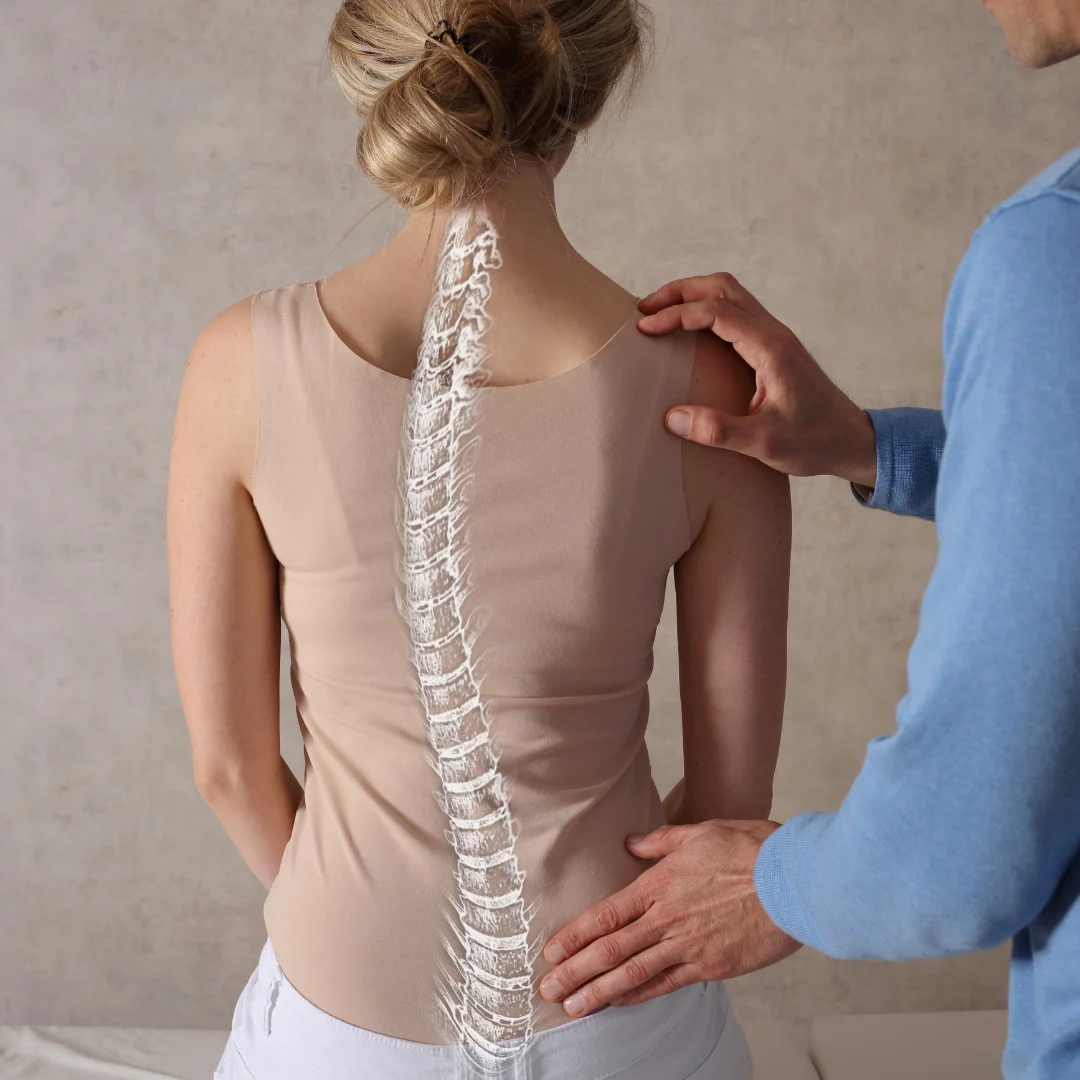
When the body is viewed from the side, the normal curves of the spine become apparent. In the upper back there is an outward (convex) curve, called kyphosis, and in the lower back there is an inward (concave) curve, called lordosis. When we speak of scoliosis, we mean a sideways curvature of the spine. Looking at the body from the front or the back, the spine appears to lean to one side. A hunchback, or kyphosis, on the other hand, is an increase in the outward curve of the upper back.
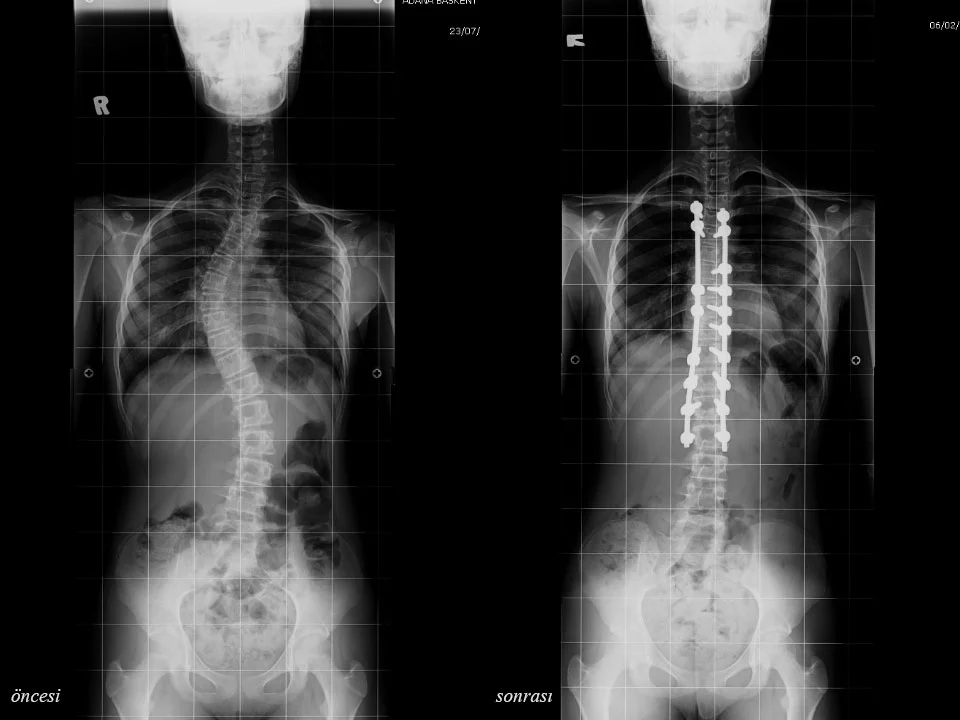
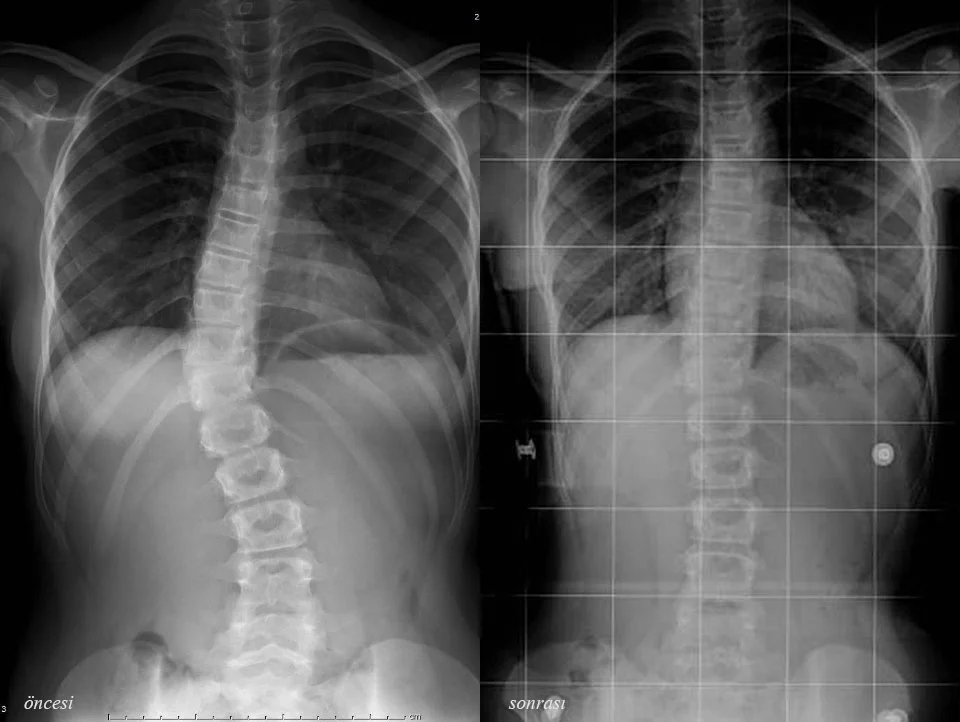
After Scoliosis Surgery
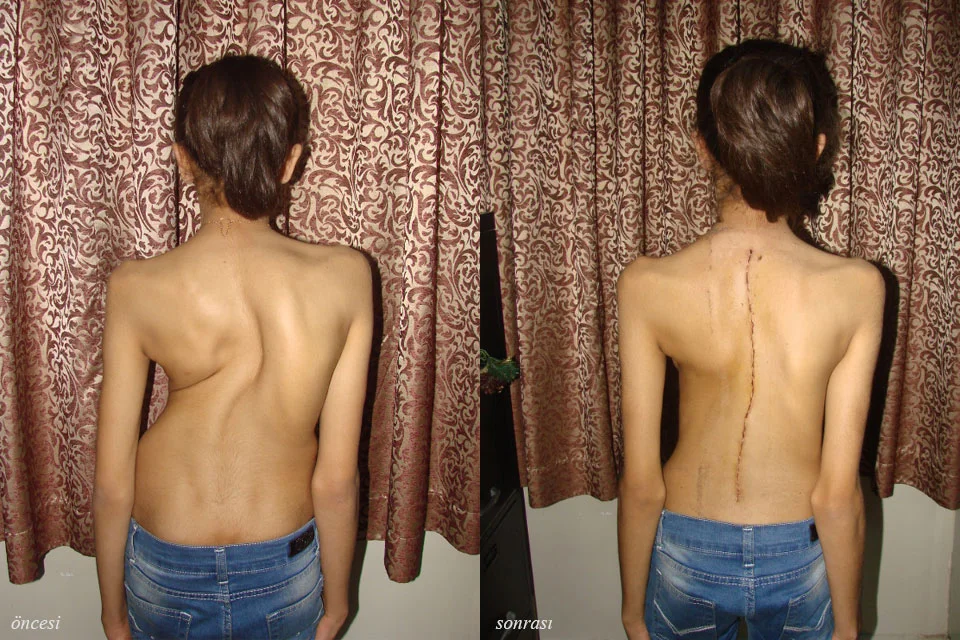
The typical signs of scoliosis include a difference in the height of the two shoulders, one shoulder blade being more prominent than the other, one hip being higher or more pronounced than the other, the development of asymmetry in the waist area, and one side of the back appearing higher than the other when the patient bends forward.
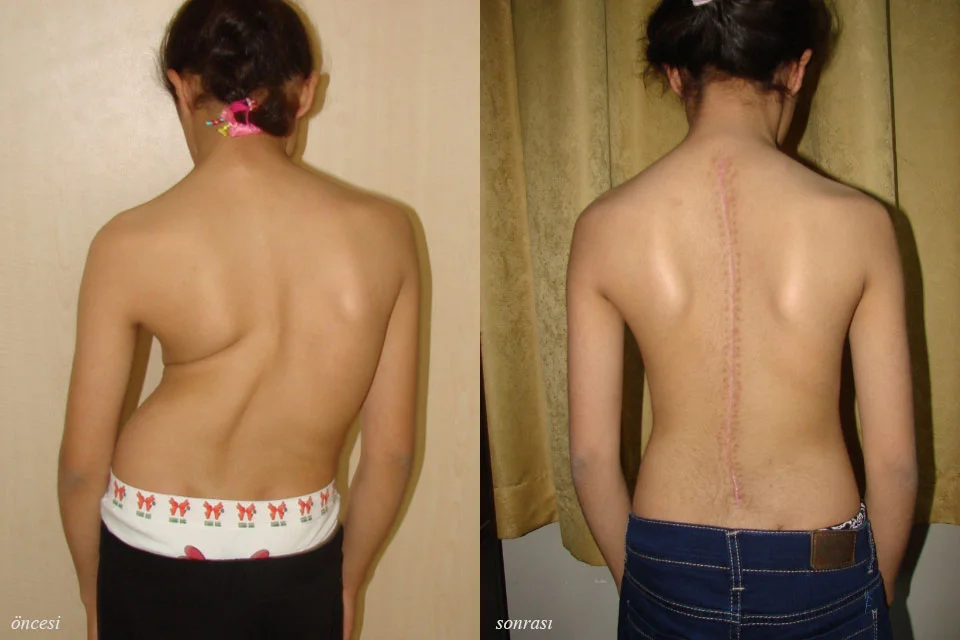
Scoliosis affects 1-4% of the population and particularly affects adolescent girls. In our country there are around 200,000 to 800,000 girls and women with scoliosis. If scoliosis is mild it may not be noticeable from the outside and can only be identified through radiological examination. Advanced scoliosis is easily noticed from the outside because it causes serious cosmetic problems in the body. Idiopathic scoliosis, the most common form we encounter and whose cause is unknown, is a familial condition and is not affected by any environmental factors. Habits such as carrying heavy loads or always carrying a bag on the same side play no role in the development of scoliosis.
In patients who are still growing and have not yet completed their skeletal development, brace treatment may be prescribed for scoliosis. The brace is custom-made for each patient, with measurements taken to fit their body. The purpose of the brace is to prevent the curvature from increasing while the child grows. Braces do not fully correct the spine, but they can stop it from progressing. For brace treatment to be successful, it must be used for mild to moderate curvatures and requires regular follow-up, a brace properly made for the patient, a cooperative patient and a supportive family, and use for at least 20 hours a day.
When brace treatment does not produce a response, surgical treatment is used. The most commonly performed surgical procedure is fusion, carried out with instrumentation using screws and rods together with a bone graft. With instrumentation systems it is possible to correct the curvature by around 80%.
Scoliosis Before and After Bracing
For scoliosis that begins before the age of 5, early detection, determining its type, and starting treatment early are important. The treatments for congenital and idiopathic scoliosis are very different from one another. It is important to evaluate infantile scoliosis detected between the ages of 0 and 3. In these patients, by taking special measurements, we can form an idea of whether it will progress. About 50% of these cases resolve on their own. In congenital scoliosis, however, if no intervention is made, the lungs and heart of these children will be adversely affected, with outcomes that can be fatal. For this reason, in the treatment of children under the age of 10 we perform procedures such as bracing, casting, fusion-hemiepiphysiodesis surgery, hemivertebra (removal of a half-vertebra), growth-friendly surgery, and magnetic rod surgery.
In children who have completed their growth (who have been menstruating for 2 years), a curve exceeding 50 degrees in the upper back or 40 degrees in the lower back requires surgical intervention. What happens if adolescents with a curvature above 50 degrees do not have surgery? Because these children's curves increase by between 1.1 and 2.5 degrees per year, 40 years later their quality of life will be poor, they will suffer shortness of breath, have pain at an early age, experience problems in social settings, and be more prone to psychological problems. The most commonly used method during this period is to place screws into the vertebrae from the back, connect them to one another with a pair of rods, perform the correction, and carry out fusion. Currently, in good hands, the rate of correction in terms of degrees is around 70% to 80%. This means that a small scoliosis may remain visible on X-ray while the child looks normal from the outside. Another new method we apply is the VBT technique, that is, the tethering (cord) scoliosis method, which is used in specially selected children around the age of 10 and corrects scoliosis by leaving the spine mobile, without performing fusion.
For Scoliosis Treatment in Adana, we are proud to help you with our expertise and experience. Scoliosis is a condition in which the spine curves abnormally, and if it is not treated it can progress and lead to pain. As a Scoliosis Treatment Center in Adana, we are here to offer you the best treatment options.
Why Choose Us?
- Experienced Specialists: We have a team specialized in the treatment of scoliosis.
- Personalized Treatment: We achieve the most effective results by creating individual treatment plans for each patient.
- State-of-the-Art Technology: We improve the treatment process by using the latest medical technologies.
- Patient Satisfaction: The health and satisfaction of our patients is our highest priority.
As a Scoliosis Treatment Center in Adana, we help patients of all ages who show signs of scoliosis. We are here to support you throughout your treatment. Fight scoliosis, reduce your pain, and adopt a healthier lifestyle. Your health is important to us.
Contact us to learn more about Scoliosis Treatment in Adana and to book a free evaluation appointment. We would be happy to help you. A healthy spine is the foundation of a healthy life.