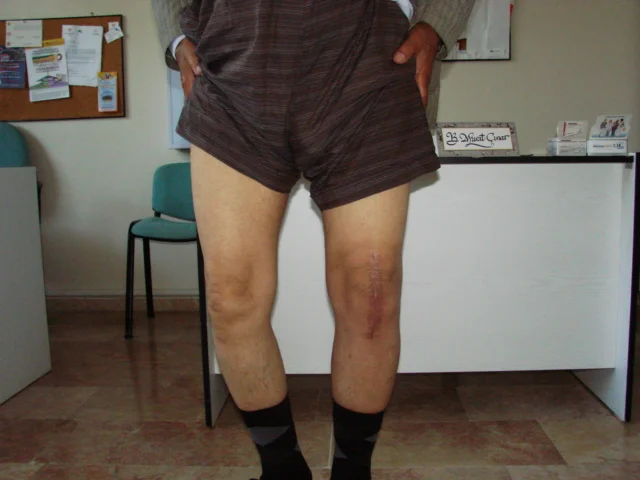
Osteoarthritis of the Knee Joint
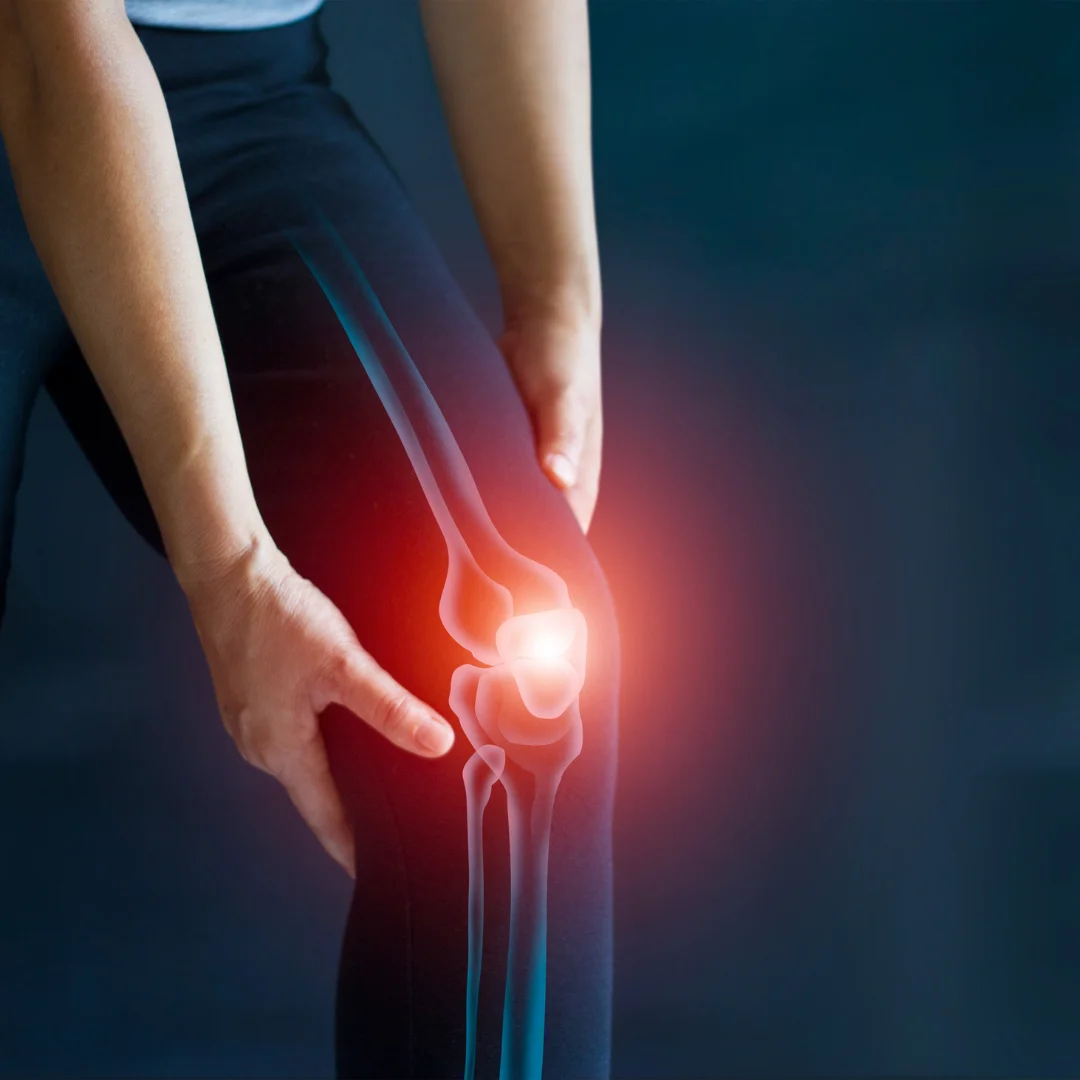
Osteoarthritis of the Knee Joint
Osteoarthritis is a very common problem from middle age onward. It mostly affects
the knee joint, but many joints throughout the body can be involved. When
it occurs in the knee, the pain and difficulty walking noticeably affect daily life.
It can develop in anyone after their fifties. In the past nothing could
be done about this condition, but with advancing technology it can now be
treated — first with medication, then with intra-articular knee injections in the early
stages, and, once walking becomes severely impaired, with surgery. As in every joint in
our body, the bone surface in the knee joint is covered with cartilage.
The kneecap is also attached to a very powerful muscle that moves the
knee. The joint cartilage, which completes its growth by the ages of 18-20,
cannot renew itself afterwards and ages along with us. Injuries that damage the
joint, such as trauma and meniscus tears, accelerate this process, wearing down the joint
cartilage and ultimately exposing the bone beneath it. Once the bone surfaces begin
to rub against one another, the pain and difficulty walking increase even further.
Although knee osteoarthritis can develop at an early age due to injuries of the
knee ligaments, cartilage and meniscus, joint infections and intra-articular trauma, it most often begins
as a genetically predisposed aging of the cartilage once we reach the ages coded
in our genes. Just as the graying of our hair occurs early or late
depending on a gene inherited from one of our parents — and there is
nothing we can do about it — there is likewise nothing we can do
about the genetic origin of this aging in the joint. Nor can we do
anything about the passing years. The main factor we can influence is slowing this
process by reducing the loads placed on the knee. We can do this in
two ways: first, by avoiding excess weight; and second, by reducing the excessive forces
placed on the knee, such as squatting. Scientific studies have shown that losing 10%
of body weight produces at least a 25% reduction in pain. Contrary to popular
belief, being excessively active does not prevent osteoarthritis; on the contrary, it accelerates it.
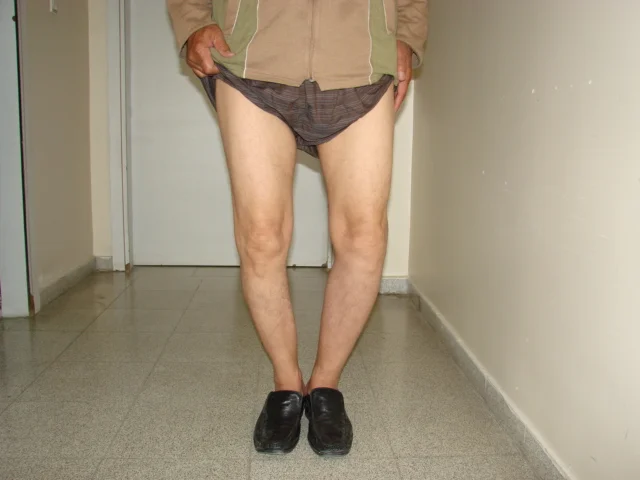
Doctors begin to suspect the presence of knee osteoarthritis as soon as the patient walks
into the examination room — from their age, their excess weight, the way they walk and
the deformity that has developed in their knees. The patient's long-standing history and the sensation
of friction felt in the knee during the examination reinforce the diagnosis. A standing, two-view knee
X-ray and an image of the kneecap establish the diagnosis in the great majority of
cases. Although magnetic resonance imaging (MRI) may be needed in very early-stage disease where the cartilage
is still preserved, plain X-rays are sufficient for diagnosis and MRI is of no benefit.
We can broadly divide treatment into three groups.
1. Medication Therapy
2. Intra-articular (Knee) Injections
3. Surgical Treatments
We have no chance of reversing an osteoarthritic process that has already begun.
Treatments are carried out to relieve pain and to slow the progression
of the disease. The first thing we can do in treatment is to
help the patient lose weight. Because the patient is elderly and already
less active owing to the joint problem, losing weight is very difficult, so
if you cannot lose weight do not turn it into an obsession
and let it demoralize you. Second, change your activities. For example, you can
give up walking on rough terrain and squatting down to the ground.
Medication Therapy
At the onset of the disease, during periods when there is occasional swelling
in the knee and aching that also occurs at night, cold should be
applied several times a day with an ice pack wrapped in a towel,
and anti-inflammatory medications should be used to help the joint membrane reabsorb the fluid
within the joint. Because these drugs are used not merely as painkillers but
to help the joint fluid return to its normal amount, they need to
be taken regularly for 2-3 weeks. Meanwhile, it may be advisable to also
take a stomach-protecting medication so that these drugs do not harm your stomach.
As the disease progresses you will use more medication, so drug-related side
effects may be seen more often. Because elderly patients are at
risk of problems from these medications, we more often give acetaminophen instead.
In early-stage patients whose joint cartilage has not completely worn away, glucosamine
and chondroitin sulfate — although their effectiveness is debated, and even though
they are expensive and not reimbursed by the SGK — provide partial
benefit after being used for a period of at least 3 months.
If the occasional swelling in the knee does not respond to oral
medication and cold application, one or two steroid (cortisone) injections into the
knee, contrary to what is believed, do no harm to the knee.
In the more advanced, chronically painful stages, if the knee joint has not yet reached
its final stage, a hyaluronic acid injection into the knee relieves the patient's night pain and
can partly increase their walking distance; but the real aim of this treatment is to
somewhat reduce the patient's daily medication use and thereby reduce the side effects associated with these
drugs. In the advanced stage where no joint cartilage remains, these injections not only provide
no benefit at all but, since they are not covered by the state, they harm
your budget, and because they are an intervention inside the joint, it should be known that
— although the likelihood is low — they can even cause infection in the knee.
Physical Therapy
Physical therapy has its place in non-surgical treatment. It can be applied
to preserve the range of joint motion and to keep the muscles
strong. A common misconception here is that patients complain their pain returned
after 15 days of treatment. The treatment given to you is only
a beginning; you too must continue it yourself as a home program.
Surgery
Surgical treatment becomes necessary in the advanced stages of the disease. It
must not be forgotten that osteoarthritis is not a temporary ailment;
even though there are minor fluctuations each year, it continues to worsen.
Arthroscopy
In the early stages of knee osteoarthritis, if there is a meniscus tear in
the knee that may cause catching and pain, arthroscopy may be considered; however, it
provides no benefit for the progression of the osteoarthritis. This surgical procedure is performed
only for pain, and in the end the osteoarthritis still progresses. Unless there
is pain due to serious catching, performing arthroscopy for a meniscus tear seen on
the knee MRI alongside knee osteoarthritis does not provide the patient with long-term benefit.
In short, apart from very special circumstances, arthroscopy has no place in knee osteoarthritis.
High Tibial Osteotomy
In older patients, knee osteoarthritis can be resolved with a total knee replacement. When knee osteoarthritis develops
at a very young age, surgeons try to stay away from knee replacement surgery out of
concern that the patient — being active — could wear out the prosthesis at an early age.
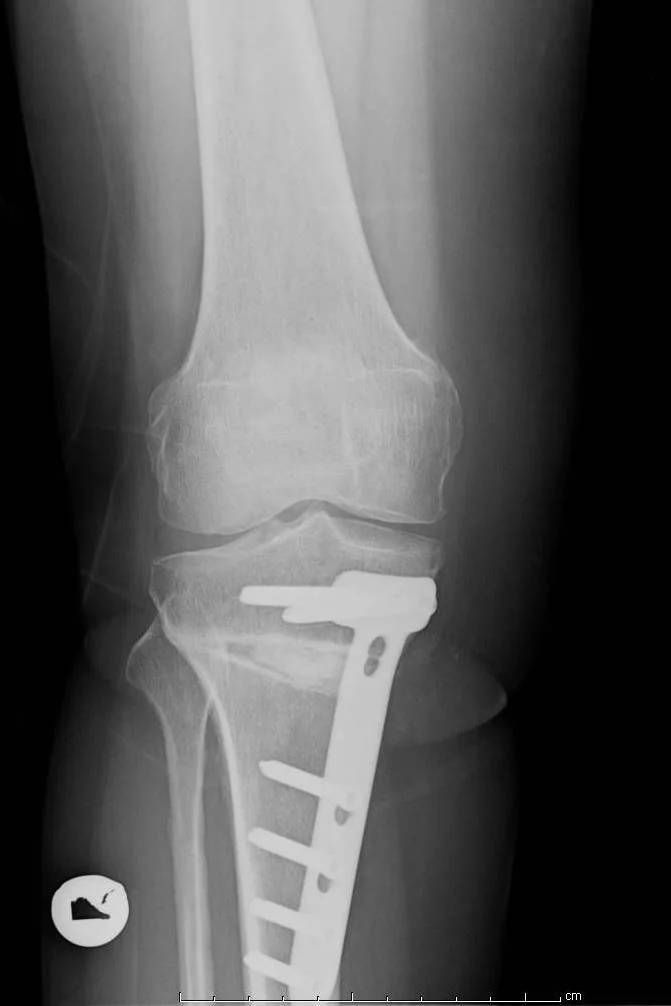
Corrective knee surgery is an option that can be chosen in active patients younger than 50-55.
It was noted that the damage develops mostly on the inner side of the knee, while the
joint surface on the outer side is relatively preserved. In this procedure, a cut is made
in the bone called the tibia at the lower part of the knee, and the load-bearing alignment
of the knee is redirected onto the preserved outer side of the joint, so that the
joint can serve for another 10-15 years; the plan is to create the conditions for a knee
replacement to be performed later, if needed at an older age, on the preserved knee bones.
Total Knee Replacement
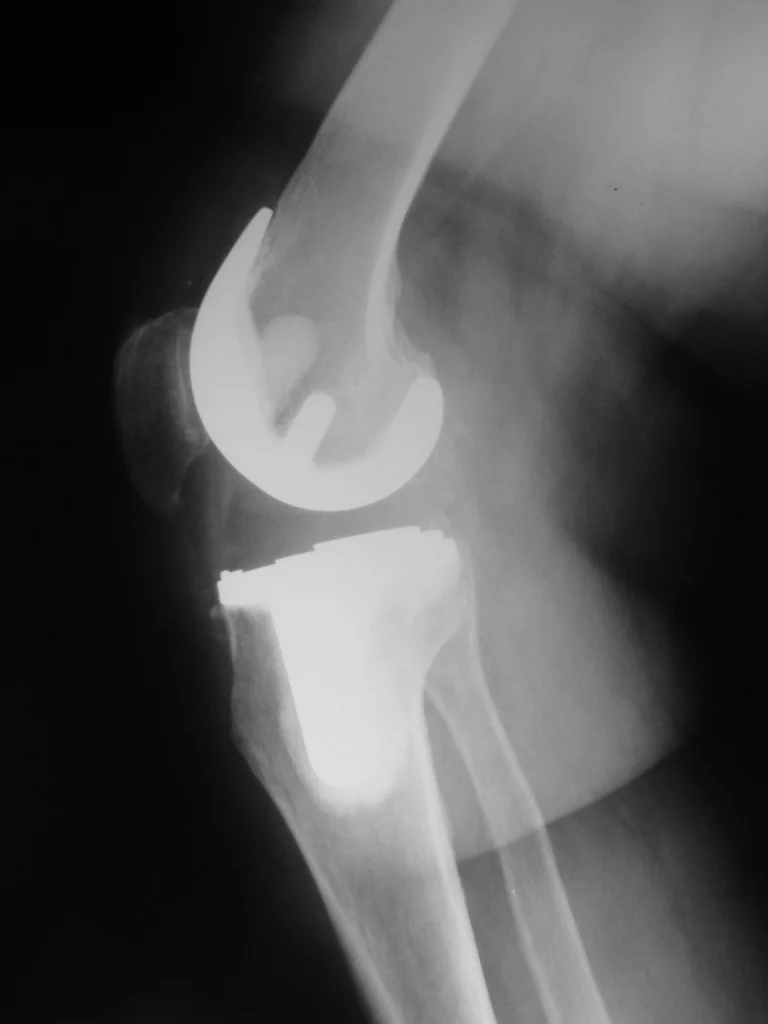
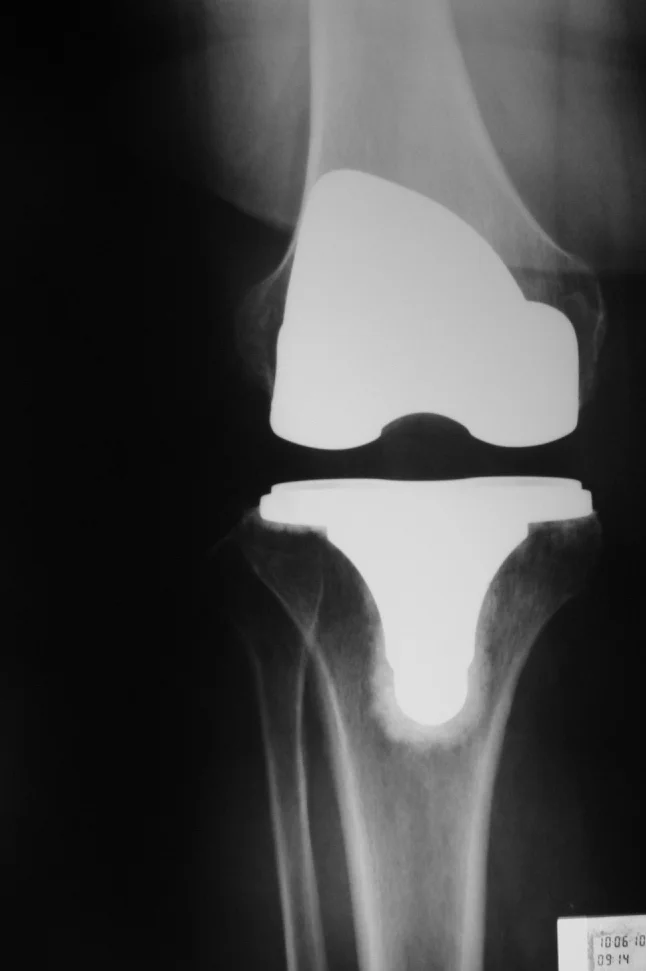
In the advanced stage of knee osteoarthritis, total knee replacement is the ultimate
treatment method in today's medicine. Total knee replacement is generally not performed
before the age of 55-60 except in very special situations, but in some
cases, when no other treatment remains for the joint, it can be
carried out after future revision (renewal) surgeries have been discussed with the patient.
Post-operative Period and Rehabilitation
Rehabilitation after knee replacement surgery begins the day after the operation. Unless the patient
has a special surgical situation, the aim is to have them stand and bear weight
immediately and to achieve at least 90 degrees of knee flexion within 3 days.
Usually, in the post-operative period, on the 1st day the patient becomes able to
leave the room with the help of a physiotherapist. On the 2nd day the
patient becomes able to meet their own needs. On the 3rd day the patient can
be sent home. The stitches are removed on the 15th day. If the doctor
has prescribed a blood thinner, it should be used for at least 3 weeks.
At home you should try to walk and do knee exercises at every opportunity.
It must not be forgotten that the final degree of knee flexion depends on
your range of knee motion before surgery and on how much you move the
knee in the early post-operative period. If you had 100 degrees of knee motion
before surgery, expecting it to become 140 degrees is wishful thinking. Generally, the pre-operative
range of knee motion can be increased by about 10 degrees after surgery. But
if the knee is not moved, knee flexion can be lost to a serious
degree. If sufficient motion is not achieved in the first 2 weeks, it is
impossible to regain this loss afterwards. Although some knee replacement designs promise the ability
to kneel on the ground after surgery, one should not aim too much at
being able to squat to the ground after this procedure. After surgery you generally
become better off, compared with your pre-operative pain, at about 3 weeks. Around the
6th week you can comfortably do all kinds of work, but the ultimate level
of comfort produced by this procedure develops slowly and is only completed at about
6 months. It is therefore wise to set your expectations of the procedure accordingly.