
Kyphosis
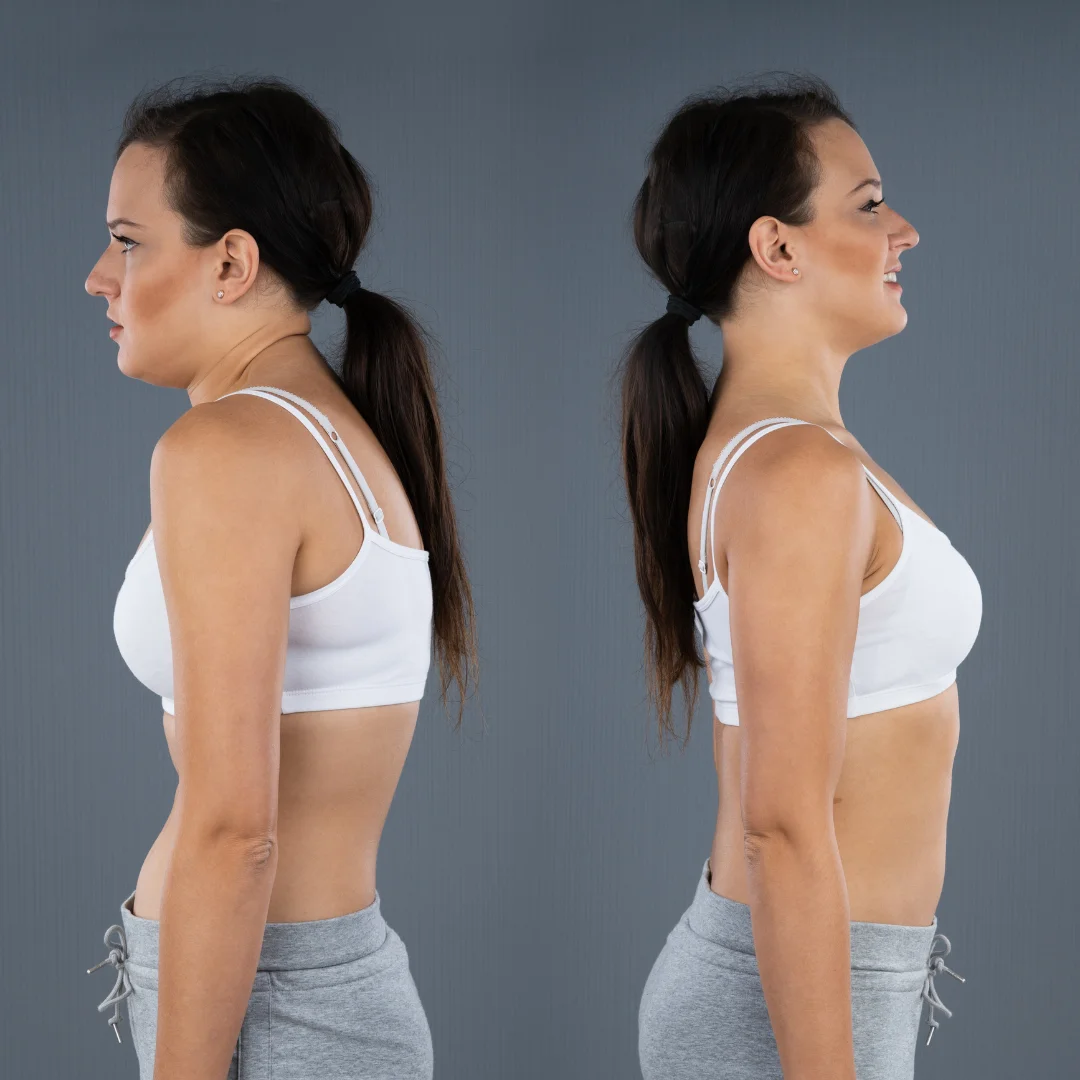
Kyphosis is an abnormal forward curvature of the spine when it is viewed from the side. In an ideal spine there is a reasonable outward curve in the upper back and a hollow in the lower back. The causes of kyphosis are: poor posture; kyphosis of unknown cause - Scheuermann's kyphosis; congenital kyphosis; kyphosis due to muscle diseases; age-related kyphosis; and kyphosis that develops as a result of spinal fractures. Cases of increased kyphosis are usually due to poor posture (postural kyphosis). Poor posture is seen frequently, especially in young adolescent girls. In a small percentage of patients with kyphosis, the kyphosis develops due to a developmental problem of the vertebrae. The vertebrae become wedge-shaped. This type of kyphosis is called Scheuermann's kyphosis, and its treatment is more difficult than that of the postural type. By measuring the angle of the kyphosis, we can obtain information about the condition. An angle below 45 degrees is considered normal, up to 60 degrees is attributed to poor posture, and angles above 60 degrees are considered abnormal and need to be treated. The treatment options are bracing and surgery. A brace may be prescribed for children who have not completed their skeletal development. When we prompt individuals with postural kyphosis, they can correct their kyphosis on their own and stand more upright; however, in patients with structural kyphosis the curve has become more rigid and they cannot correct it on their own.
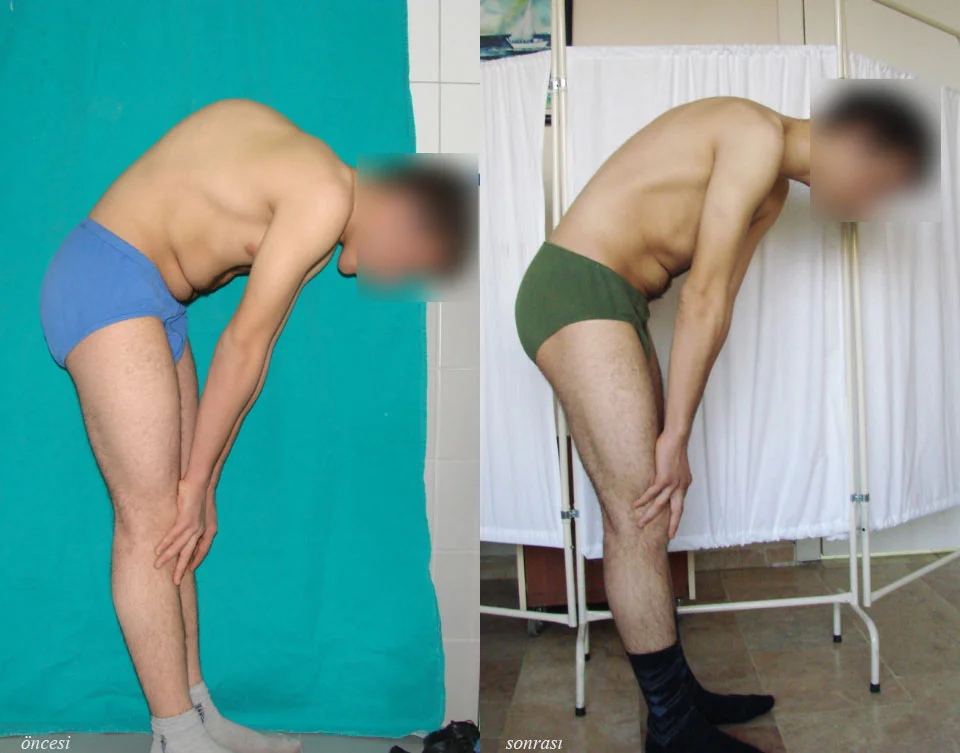
Kyphosis that begins in early childhood can cause lung and heart problems far more serious than scoliosis beginning at the same age. Kyphosis that appears later in life (age-related kyphosis) can be painful from the very beginning and can seriously impair quality of life, due both to the pain and to the reduction in lung capacity. Early-onset kyphosis must be diagnosed and its treatment started immediately. It must be monitored by a physician who specializes in this field. It should be kept in mind that surgery may be required at an early age. For painful kyphosis that appears in the elderly, a physician who specializes in this field must be consulted.
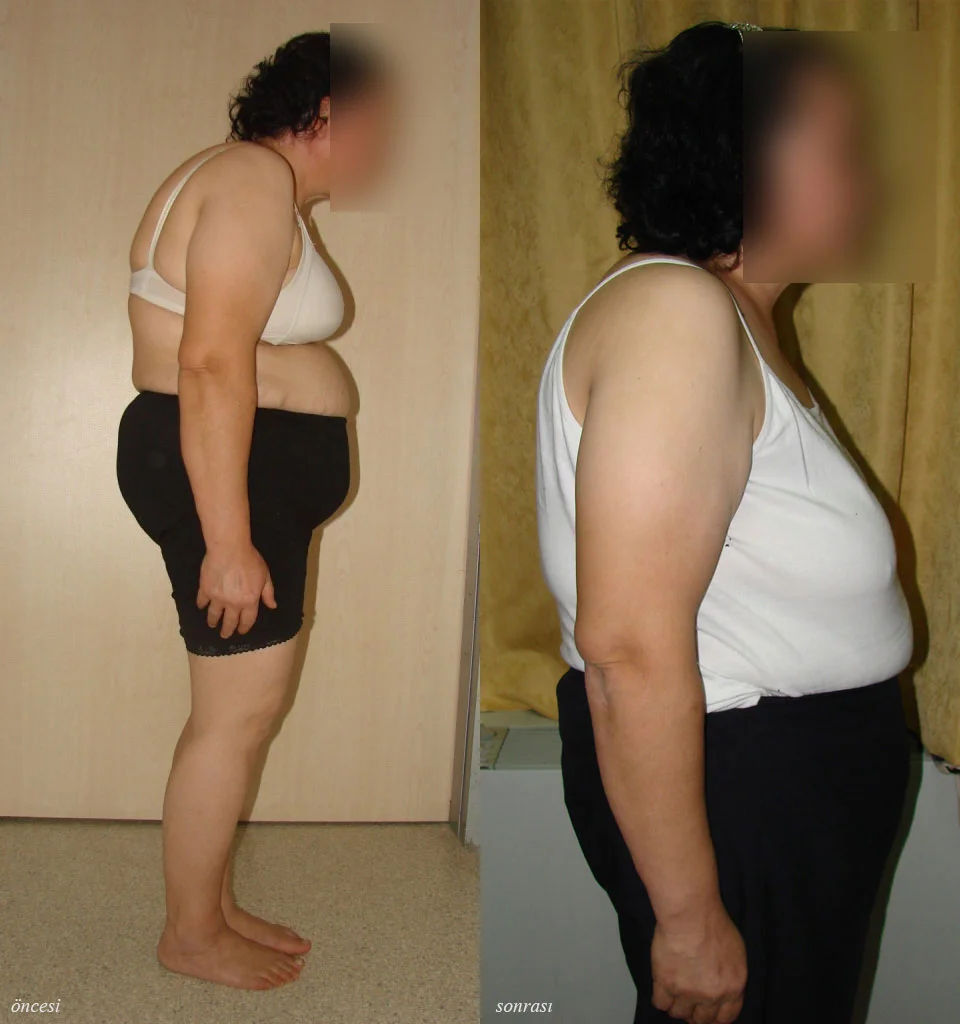
After Ankylosing Spondylitis Surgery
Kyphosis that begins in early childhood forms in the womb, progresses rapidly, and produces early symptoms; it can cause lung and heart problems far more serious than congenital scoliosis beginning at the same age, and it also carries a risk of paralysis. Early-onset kyphosis must be diagnosed and its treatment started immediately. It must be monitored by a physician who specializes in this field. It should be kept in mind that surgery may be required at an early age. In the early stages, or if the scoliosis remains at a certain size without progressing, it does not affect life at all.
The angle of the kyphosis should be measured on X-rays. We consider an angle below 45 degrees to be normal, up to 60 degrees is attributed to poor posture, and angles above 60 degrees are considered abnormal and need to be treated.
The treatment options are bracing and surgery. A brace may be prescribed for children who have not completed their skeletal development. The brace is custom-made for each patient, with measurements taken to fit their body. The purpose of the brace is to prevent the curvature from increasing while the child grows. Braces do not fully correct the spine, but they can stop it from progressing. For brace treatment to be successful, it requires regular follow-up, a brace properly made for the patient, a cooperative patient and a supportive family, and use for at least 20 hours a day.
If the kyphosis has risen above 75 degrees, it tends to progress and surgical treatment should be applied. In addition, in patients who exceed these degrees it creates an aesthetic problem. When brace treatment does not produce a response, surgical treatment is used. The most commonly performed surgical procedure is fusion, carried out using instrumentation with screws and rods, together with correction and a bone graft. The aim with instrumentation systems is to reduce the hunchback to within physiological limits.